

What Is Prompt Engineering?
Prompt Engineering: Understanding How AI Works Technically, Its Importance, and Its Future
Prompt Engineering is the skill that gives direction to artificial intelligence—its understanding, power, and logic. Today, AI is no longer just a piece of technology; it has become a decision-making partner. However, every output AI produces depends directly on the prompt it receives.
This blog explains Prompt Engineering from both conceptual and technical perspectives. We will explore what Prompt Engineering is, how it works, what happens technically inside AI when a prompt is given, how AI generates output, why Prompt Engineering is important today, and what role it will play in the future.
Table of Contents
- What Is Prompt Engineering?
- How Does Prompt Engineering Work?
- Relationship Between Prompt Engineering and AI
- What Happens Technically Inside AI?
- How Prompt Engineering Improves AI Output
- Importance of Prompt Engineering Today
- Future Role of Prompt Engineering
- How to Improve Prompt Engineering Skills
- Conclusion
What Is Prompt Engineering?
Prompt Engineering is a systematic process of designing and structuring instructions (prompts) in a way that enables AI to deliver accurate results, relevant information, context-aware responses, and high-quality output.
In simple words:
AI does exactly what you ask—but Prompt Engineering ensures that you ask the right question in the right way to get the right solution.
How Does Prompt Engineering Work?
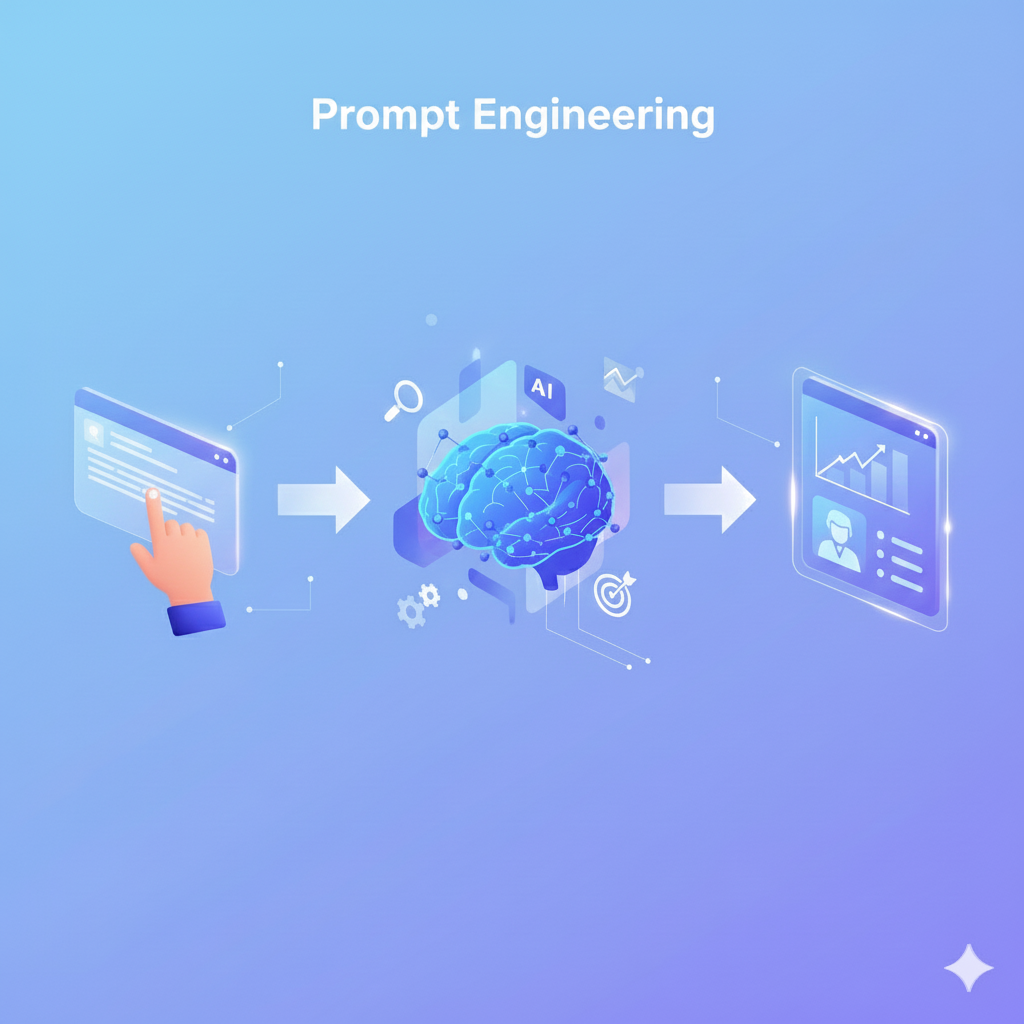
When you provide a prompt to AI, the process looks like this:
- AI reads the prompt
- It analyzes the meaning and context
- It generates a response based on its trained knowledge
If the prompt is unclear, such as “Tell me about AI”, the output will also be vague. But when the prompt is specific, the output becomes focused, structured, and useful.
The Relationship Between Prompt Engineering and AI
The relationship between Prompt Engineering and AI is similar to that between the human brain and language. AI has massive data and strong processing power, but it needs intent, direction, and control.
Prompt Engineering provides all three and transforms human–AI interaction into effective collaboration.
What Happens Technically Inside AI When a Prompt Is Given?
1. Tokenization
AI breaks the prompt into smaller units called tokens. Clear prompts produce clear tokens, which improves understanding.
2. Embeddings
Each token is converted into numerical form so AI can understand meaning mathematically. This helps AI identify context and related concepts.
3. Transformer Architecture and Attention Mechanism
AI uses attention mechanisms to decide which parts of the prompt are most important. This helps prioritize language, format, and intent.
4. Context Window
AI processes a limited amount of text at once. Prompt Engineering ensures that only relevant information is included.
5. Probability-Based Word Selection
AI selects each word based on probability, choosing the most logical next word in context. Better prompts create stronger probability chains.
How Prompt Engineering Improves AI Output
- Reduces Noise: Avoids irrelevant information
- Improves Accuracy: Clear intent reduces errors
- Controls Tone and Style: Professional, technical, or beginner-friendly
- Structured Output: Consistent and reusable results
Importance of Prompt Engineering Today
- Content Creators: Blogs, scripts, captions
- Students & Educators: Notes and explanations
- Businesses: Marketing and communication
- Developers: Code generation and debugging
Those who understand Prompt Engineering are AI controllers—not just users.
The Future Role of Prompt Engineering

- Core AI job skill
- Human–AI collaboration
- Personalized AI assistants
- Ethical and controlled automation
Prompt Engineers will act as translators between human intent and machine intelligence.
How to Improve Prompt Engineering Skills
- Keep intent clear
- Define context and audience
- Assign roles to AI
- Specify output format
- Test and refine prompts
Writing a prompt is not typing—it is thinking strategically.
Conclusion: Prompt Engineering Is the Master Key to AI
Prompt Engineering shapes how AI thinks and responds. If AI is the future, then Prompt Engineering is the knowledge that controls that future.
Learn Prompt Engineering, and AI will work for you—not the other way around.